Discover the iPhone 6s: Everything You Need to Know!
Introduction to the iPhone 6s: Why is this model still relevant?
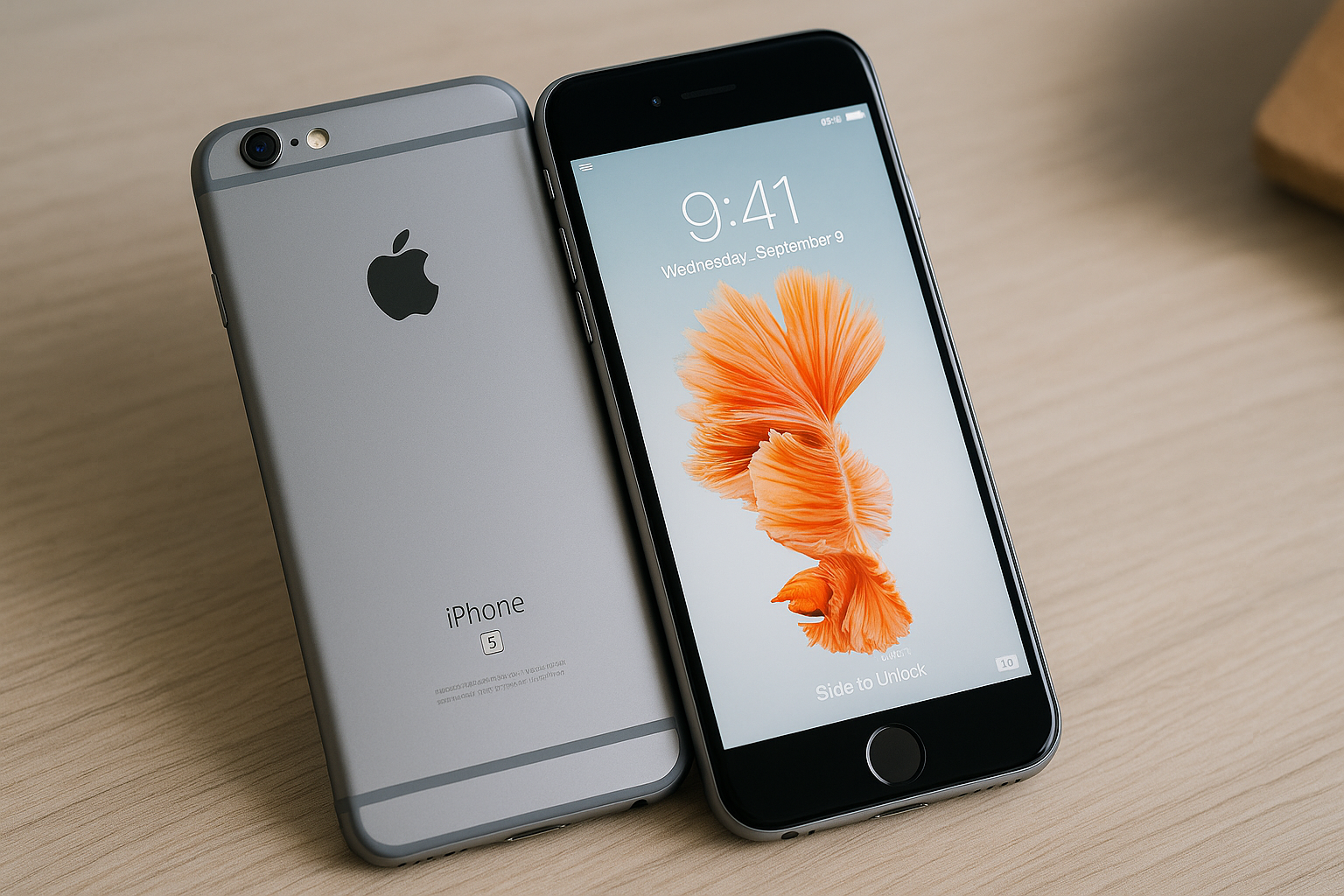
The iPhone 6s introduces 3D Touch and an improved 12 MP camera for even more usability. Discover all the information and details about the iPhone 6s on iPhones.With the introduction of the iPhone 6s in September 2015, Apple set a new standard for performance and functionality in the smartphone industry. Although the device is now several generations old, it remains a popular model among consumers looking for a reliable and versatile smartphone without the price tag of the latest devices. But what makes the iPhone 6s still stand out in today's technological landscape?
Timeless design and compact size
The iPhone 6s combines an elegant design with user-friendly dimensions. The aluminum unibody design, combined with a 4.7-inch Retina display, offers a visually appealing and practical smartphone experience. This makes the device particularly suitable for users who appreciate a compact size, in a time when smartphones are getting bigger and bigger.
Innovations that became standard
The iPhone 6s introduced 3D Touch, a technology that allowed users to activate different functions by pressing harder or softer on the screen. Although Apple later abandoned this technology, it was a groundbreaking innovation at the time. In addition, the A9 chip was introduced, which still delivers impressive performance today for basic tasks such as messaging, browsing, and using apps.
Support for iOS updates
A major factor that makes the iPhone 6s relevant is the long-term software support. Apple is known for providing several years of iOS updates, and the iPhone 6s is no exception. This ensures that users can benefit from new features and security updates, significantly extending the lifespan of this model.
Popular for specific users
The affordability of a refurbished or second-hand iPhone 6s makes it attractive to many target groups. This is especially true for students, seniors, or people buying a smartphone for the first time. Despite its age, the model still meets the needs of a broad group of users.
Thanks to a balance of innovations, durability, and an accessible price level, the iPhone 6s remains a device that is both practical and iconic.
Design and build: Classic design with a premium finish
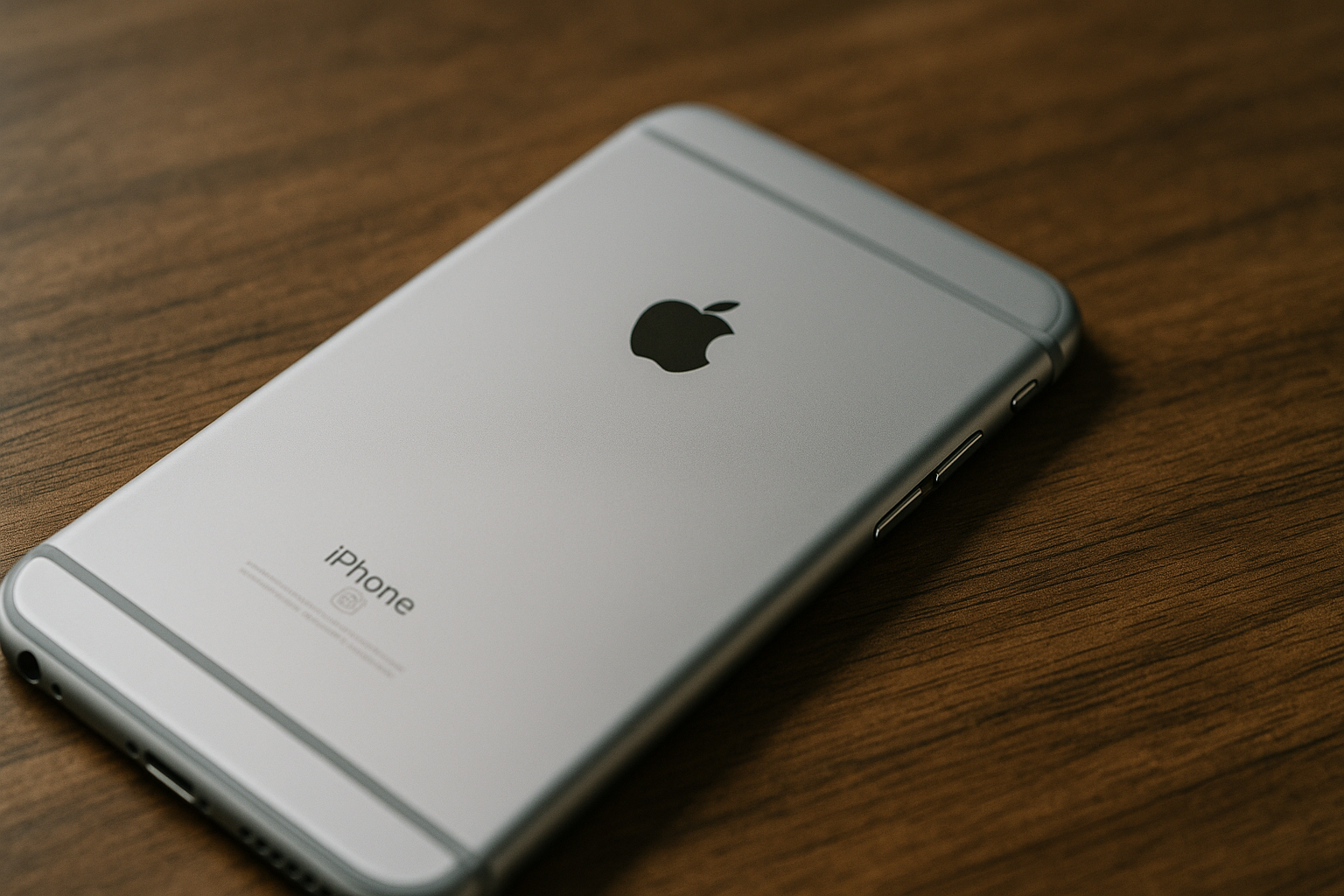
The iPhone 6s embodies a timeless design that seamlessly combines elegance and functionality. With its clean lines and rounded corners, the device exudes sophistication. Made of high-quality 7000-series aluminum, the housing is not only stylish but also exceptionally durable. This choice of material provides a solid, premium feel in the hand, while at the same time being resistant to daily wear and tear.
The device is available in several sophisticated colors such as silver, space gray, gold, and rose gold - a new addition that immediately became a favorite. These color options allow users to choose a model that matches their personal style. In addition, the polished metal edges and the satin-like surface give the design a luxurious look without compromising ease of use.
The front of the iPhone 6s is dominated by the Retina HD display, which is protected by exceptionally strong Ion-X glass. This specially developed glass is resistant to scratches and cracks, contributing to the durability of the device. The characteristic home button, adorned with Touch ID technology, not only offers security but also an easy way to quickly access the device.
With a thickness of only 7.1 mm and a weight of 143 grams, the iPhone 6s lies comfortably in the hand and is easy to carry. Despite the thin housing, the device offers a firm grip, which is handy for daily use. Every detail - from the seamless transitions between the materials to the precise placement of the buttons - reflects Apple's dedication to excellent design and finish.
Screen technology: Retina Display and 3D Touch explained
The iPhone 6s is equipped with advanced Retina HD display technology, known for its sharp and vibrant display. The screen has a resolution of 1334 x 750 pixels at 326 pixels per inch (ppi), resulting in an extremely detailed image. Thanks to a high contrast ratio of 1400:1, the screen offers richness in both light and dark tones, bringing photos, videos, and apps to life. In addition, the built-in Dual-Domain pixel technology enhances viewing angles, meaning that colors and brightness remain consistent, regardless of how the screen is viewed.
Another groundbreaking feature that makes the iPhone 6s screen unique is the introduction of 3D Touch technology. With 3D Touch, the touchscreen goes beyond just tapping and swiping. It responds to different pressure levels thanks to sensors integrated into the display. This enables new interactions, such as "Peek" and "Pop", allowing users to preview and navigate deeper into apps and content. For example: a light press opens a preview of an email, while a firm press opens the full email.
Furthermore, 3D Touch also integrates context-sensitive shortcuts. By pressing firmly on app icons, users can perform direct actions, such as sending a message, without fully opening the app. This saves time and makes multitasking more intuitive.
In addition, the improved Taptic Engine ensures that the feedback when using 3D Touch feels refined and accurate. These technologies combine to make screen interaction more responsive and immersive, breaking the boundaries of traditional touchscreens.
Performance: What does the A9 chip offer in the iPhone 6s?
The iPhone 6s is equipped with the A9 chip, a 64-bit processor from Apple designed to deliver impressive performance. This chip, built on an advanced 14-nanometer architecture, offers a significant improvement in speed and efficiency over its predecessor, the A8. This allows users to expect a responsive and smooth experience, regardless of whether they are running heavy apps or multitasking.
Increased CPU and GPU performance
The A9 chip promises up to 70% faster CPU performance and 90% faster GPU speeds than the A8 chip. This means that tasks such as loading apps, scrolling through content, and performing complex calculations run faster and smoother. Graphically intensive applications, such as mobile games or video editing, also benefit from this higher processing power.
Efficient construction
The feasibility of higher performance is partly made possible by a more efficient construction. Thanks to the smaller manufacturing process, the chip consumes less energy, which contributes to better battery life. This is especially important for users who use their smartphone intensively throughout a full day.
Suitable for advanced features
The power of the A9 makes it possible to support new iPhone features. Functionalities such as Live Photos, 4K video recordings, and the improved functionality of 3D Touch are smoothly executed thanks to the capabilities of this chip. In addition, the hardware integration ensures that the collaboration between software and hardware feels seamless.
Comparable to desktop performance
Apple positions the A9 chip as a step towards desktop-class performance for mobile devices. This emphasizes how powerful and future-proof this processor is. This makes the iPhone 6s not only suitable for daily use but also for heavier applications that traditionally require a lot of capacity.
In short, the A9 chip offers a harmonious balance between power, efficiency, and functionality, where performance levels extend beyond what was common in mobile devices at the time.
Cameras: Meet the 12 MP main camera and 5 MP selfie camera
The iPhone 6s is equipped with advanced cameras that offer impressive image quality, both for photos and videos. The 12 MP main camera on the back is designed to take sharp, clear shots, even in low-light conditions. Thanks to the improved sensor and advanced image processing technologies, users can enjoy vibrant colors and excellent details.
A characteristic of the main camera is the ability to record 4K videos, a feature that offers exceptional resolution with four times the detail of Full-HD videos. This makes the iPhone 6s ideal for content creators and lovers of high-quality videography. With focus pixel technology, focusing is faster and more accurate, which is essential for moving subjects.
The True Tone flash provides natural lighting with soft shadows. This makes it easier to capture realistic colors, both during the day and in the evening. In addition, the camera supports features such as Live Photos, which bring photos to life with short video clips and sound. This adds a creative dimension to photography.
For selfies and video calls, the 5 MP FaceTime HD camera on the front is a great asset. With Retina Flash, which uses the screen as a flash, the iPhone 6s offers an extra boost of brightness in low light. This function automatically adjusts the color temperature to display natural skin tones.
Thanks to these innovative camera features, the iPhone 6s is more than just a smartphone; it's a versatile tool for photography and video production that combines quality and ease of use.
iOS support: What updates are available and how does the iPhone 6s perform today?
The iPhone 6s, released in September 2015, has had impressively long-lasting support from Apple. The device was originally equipped with iOS 9 and has since gone through every major iOS update process up to and including iOS 15, which was launched in 2021. This makes the iPhone 6s one of the longest-supported iPhones in Apple's history.
Available updates
The iPhone 6s no longer received support for iOS 16, which was introduced in 2022. This means that iOS 15 is the last version available on this device. In this version, Apple provides security updates and performance improvements to ensure stability. However, users should keep in mind that Apple may reduce the frequency of security patches for iOS 15 in the future.
To install the latest security patches, users can simply navigate to Settings > General > Software Update. Performing these updates is essential to ensure safe use of the device.
Performance of the iPhone 6s in 2023
In terms of performance, the iPhone 6s is still sufficient for basic tasks such as calling, texting, and light apps such as email and social media. However, the built-in A9 chip and 2 GB of RAM, revolutionary at the time, are limited compared to current standards.
Positive points:
Smooth performance with essential apps.
Good compatibility with older apps.
Limitations:
Visible delays with heavier applications.
Battery aging results in shorter usage times.
No access to features of newer iOS versions, such as widgets on the lock screen or Live Text.
For specific user groups, such as the elderly or children, the iPhone 6s still offers a functional experience. However, more modern features and a smoother user experience require a newer model.
Battery life and efficiency: What can you expect from a full charge?
The iPhone 6s is known for its sleek design and impressive performance, but how does battery life compare in daily use? For many users, it is important to know how much efficiency they can expect from a full charge. The device is equipped with a 1715 mAh lithium-ion battery, a capacity that is smaller than its predecessor, the iPhone 6. However, the software optimization in iOS ensures that battery performance is better tailored to everyday needs.
In normal usage scenarios, one can expect the iPhone 6s to last a full day, depending on the type of activities. For tasks such as calling, texting, and light internet browsing, the device offers around 14 hours of talk time via 3G and up to 10 hours of surfing on Wi-Fi. Multimedia, such as streaming videos or playing music, consumes more energy. The device delivers up to 11 hours of continuous video playback and 50 hours of audio playback. Up to 10 days (240 hours) is specified for standby time.
Apple's integration of the A9 chip in combination with iOS optimizes energy consumption. Features such as 'Low Power Mode' play an important role here. With this mode, non-essential processes are temporarily disabled, which significantly extends battery life. However, it is crucial to understand that battery performance can vary due to factors such as device settings, background processes, and app usage.
For anyone who uses intensive apps, such as mobile games or streaming services, it may be wise to keep an external battery or power bank on hand. In addition, it is advisable to regularly perform updates, as Apple often releases optimizations that improve battery efficiency.
Storage options and expandability: How much space do you need?
The iPhone 6s offers various storage options designed to meet diverse user needs. At launch, the device was available in three storage variants: 16 GB, 64 GB, and 128 GB. These choices play a crucial role for consumers who are looking for a balance between price and storage capacity.
The storage capacity you need largely depends on your usage pattern. Users with light needs, such as managing a limited amount of apps, photos, and videos, may be satisfied with the entry-level 16 GB model. However, with the growing size of apps, iOS updates, and multimedia content, 16 GB can quickly be considered too limited today.
For those who need more space, such as users who like to keep extensive photo libraries, regularly record videos in HD quality, or download large apps, the 64 GB option is a better choice. This configuration offers significantly more flexibility without storage limits quickly becoming a problem.
If maximum storage is a priority, for example for those who record 4K videos, play extensive games, or regularly store offline movies, the 128 GB variant is the most future-proof solution. This is especially advantageous for users who plan to use the phone for several years.
An important detail to consider is the lack of expandable storage options with the iPhone 6s. Apple does not support memory cards such as microSD, which means that the chosen storage capacity cannot be increased afterwards. When making a choice, it is therefore essential to map your current and future storage needs.
Comparison with other models: How does the iPhone 6s compare to more modern iPhones?
Design and build quality
The iPhone 6s has a classic design with rounded edges and an aluminum casing, which was considered premium at the time. Compared to more recent models such as the iPhone 13 and iPhone 14, however, this device lacks some modern innovations. New iPhones are characterized by edgeless screens, a flatter design, and the use of high-quality glass and stainless steel. In addition, the iPhone 6s still has physical home buttons and wider screen bezels, while modern models consist almost entirely of screen thanks to Face ID technology.
Screen and resolution
The iPhone 6s features a 4.7-inch Retina HD screen with a resolution of 1334 x 750 pixels. While this was impressive at the time, newer devices such as the iPhone 14 offer a Super Retina XDR OLED screen with significantly higher resolution and better brightness. HDR support, deeper blacks, and a wider color spectrum ensure that modern iPhones deliver a much better visual experience.
Performance and hardware
The A9 chipset of the iPhone 6s was revolutionary at launch, but now lags behind in terms of speed and energy efficiency. Comparing it to the powerful A16 Bionic chip, found in the iPhone 14 Pro models, clearly shows the technological progress. Multitasking, gaming, and machine learning offer significantly better performance on modern devices than what the iPhone 6s can deliver.
Cameras
The iPhone 6s features a single 12 MP rear camera and a 5 MP camera for selfies. Modern iPhones are equipped with more advanced camera systems, such as dual or triple lenses and LiDAR scanners. Features such as night mode, cinematic video, and ProRAW photography are completely absent on the 6s.
Battery and charging options
The battery life of the iPhone 6s is more limited compared to recent models. The latest iPhones support fast charging, MagSafe, and wireless charging, something that is completely missing from the 6s.
In short, the iPhone 6s marks an important point in technological history, but clearly lags behind modern technical standards.
Price and value: Is the iPhone 6s a good investment today?
The iPhone 6s was launched in 2015 and marked a significant step in the development of smartphones at the time. Today, almost a decade later, it is relevant to consider whether this phone is still a wise investment. Both the current market value and the added functionality relative to current standards play a crucial role here.
Current price and availability
The price of the iPhone 6s has dropped significantly over the years. On platforms such as Marktplaats or refurbished webshops, the price is on average between €70 and €150, depending on the condition of the device, the storage capacity, and the accessories that come with it. New copies are no longer available through Apple itself, which means that consumers are dependent on second-hand sellers or specialized refurbished providers.
Functionality and performance
Despite its age, the iPhone 6s still offers sufficient functionality for basic tasks such as calling, texting, and light app usage. The A9 chipset and 2GB of RAM deliver solid performance for older iOS versions, but may struggle with the demands of modern apps and updates. Especially heavy graphic work or gaming exceeds the technical capabilities of the 6s. However, software support from Apple has recently stopped, meaning that security updates are no longer available.
Comparison with alternatives
Compared to newer entry-level models such as the iPhone SE (2020) or competing Android devices in the same price range, the iPhone 6s is outdated in many respects. Newer devices offer better specifications, such as Super Retina screens, better cameras, and longer battery life. In addition, models with recent software support are more secure and better compatible with future apps.
Considerations for potential buyers
Anyone considering an iPhone 6s should take into account the limitations of the device and its outdated status. It can be a budget-friendly choice for those who don't need advanced features, but for long-term use or heavier smartphone use, it is probably not a sustainable investment. With refurbished devices, it is essential to pay attention to warranties and battery status.
Pros and cons: An objective look at this iconic device
The iPhone 6s remains one of the most discussed devices in Apple's history. To provide a clear picture, the strengths and weaknesses of this iconic device are objectively set out.
Advantages of the iPhone 6s
- 3D Touch technology: One of the most groundbreaking innovations of the iPhone 6s is the introduction of 3D Touch. It offers users a new way of interacting with the screen, enabling quick actions and function previews.
- Improved performance: The iPhone 6s features the powerful A9 chip, which still performs well for basic use and multitasking. In its time, it offered impressive speed and energy efficiency, contributing to a smooth user experience.
- Camera upgrades: The 12-megapixel rear camera offers sharper, more detailed images and supports 4K video recording. The 5-megapixel FaceTime camera with Retina flash also provides better selfies, even in low light.
- Compact and lightweight design: The size and weight of the 6s make the device user-friendly. With its aluminum casing, it is sturdy without compromising portability.
- iOS support: Despite its age, the iPhone 6s supports a considerable number of iOS updates, meaning users can benefit from some modern features and security patches.
Disadvantages of the iPhone 6s
- Battery life: Although performance is impressive, battery capacity leaves something to be desired. With intensive use, many users have reported that the battery drains quickly and daily charging is necessary.
- Display quality: Although the Retina screen is bright and colorful, it cannot compete with the OLED screens introduced later in more modern devices in terms of resolution and vibrancy.
- Lack of modern features: Innovations such as Face ID, full-screen design, and wireless charging are missing, making the device less attractive to users who are used to these new technologies.
- Vulnerability of the casing: Despite the aluminum material used, it has been found that the iPhone 6s is susceptible to wear and scratches after prolonged use. This may reduce the aesthetic value.
With this balance of pros and cons, the iPhone 6s offers a clear insight into how Apple shaped technology at the time and which aspects can still meet current expectations.
In conclusion: Is the iPhone 6s still a smart choice in 2023?
The iPhone 6s, launched in 2015, has had a lot to offer in its time, but how does this outdated device perform in 2023? There are a number of aspects to consider when determining whether this smartphone is still a worthwhile purchase, depending on the user's needs.
Performance and functionality:
The iPhone 6s uses the Apple A9 chip, which delivered impressive performance at the time. However, in 2023, this outdated processor may struggle with heavier applications, multitasking, and the latest games. For basic tasks such as calling, texting, and using light apps, the device remains sufficient. However, it should be noted that the 2GB of RAM is limited for modern software requirements.
Software support:
Apple is known for its long-term software support, and the iPhone 6s has received iOS updates for years. However, with the launch of iOS 16, Apple has decided to end support for this device. This means that users are stuck with older iOS versions without access to new features and security updates, which can pose risks to privacy and security.
Camera and battery:
The 12 MP camera of the iPhone 6s was a highlight at launch, but is no longer comparable to modern smartphones with advanced image processing and night mode. In addition, the age of the device plays a role in battery performance. Older models such as the 6s may experience significantly reduced battery capacity, reducing the usage time between charges.
Compatibility and connectivity:
Considerations such as the absence of support for 5G networks and limitations in storage space (starting at 16GB in some models) make the device less suitable for users who store a lot of media or want to use the latest connectivity options.
In short, the iPhone 6s can still meet the basic requirements for non-intensive users in 2023. However, given the technological advancements and limitations of the device, it is important to carefully weigh these factors.