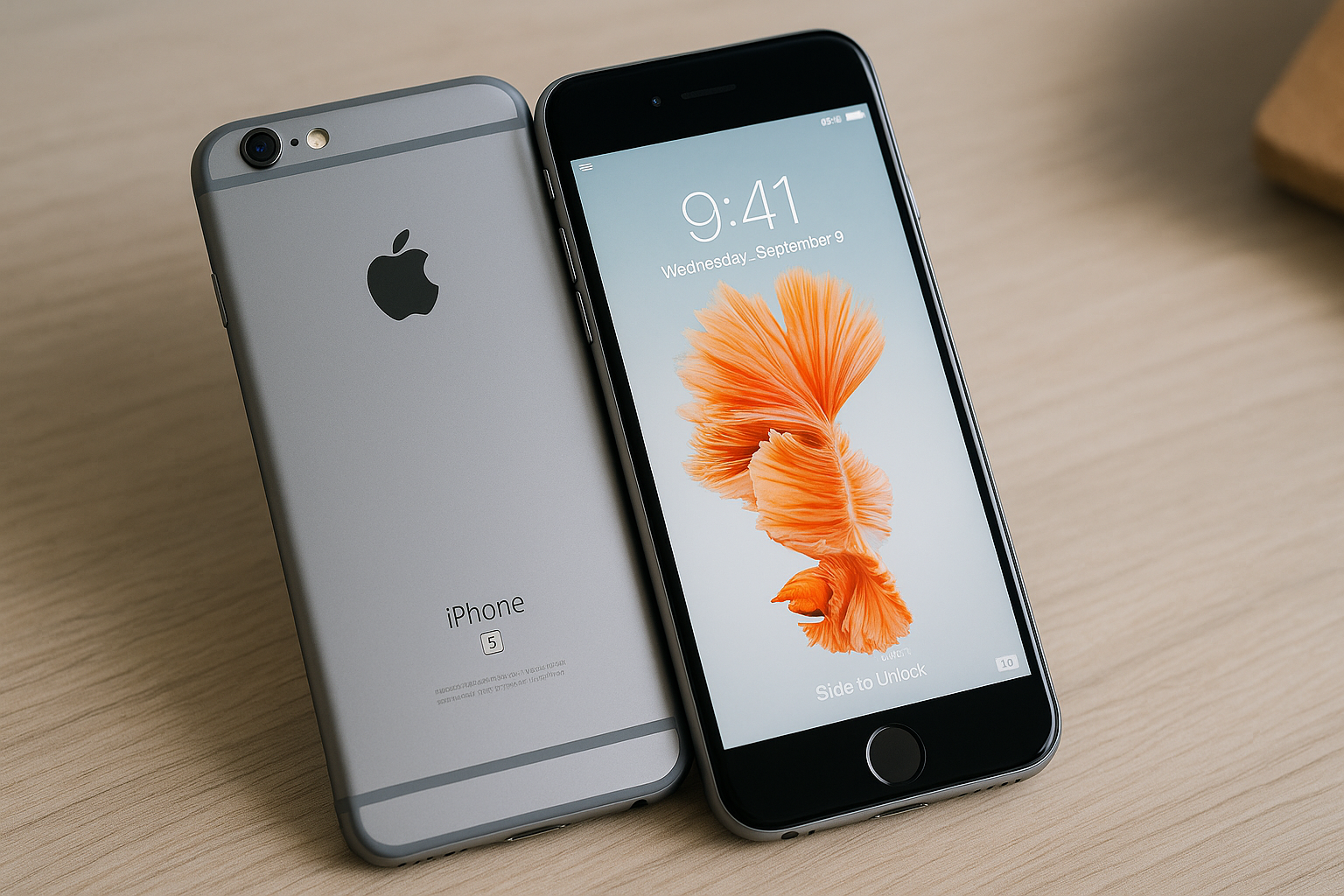
The iPhone 6: Full Specifications and Key Features
Introducing the iPhone 6: A Revolution in Smartphone Design
The iPhone 6 remains an iconic model thanks to its sleek design, Retina HD display, and reliable performance. Discover the full specifications and find your ideal iPhone 6 at iPhones.With the introduction of the iPhone 6 in September 2014, Apple ushered in a new era for smartphone design. The device came with a larger screen size and a slimmer design, a substantial change compared to previous generations. These innovations not only symbolized a stylistic revision but also gave a functional twist to the way smartphones were used.
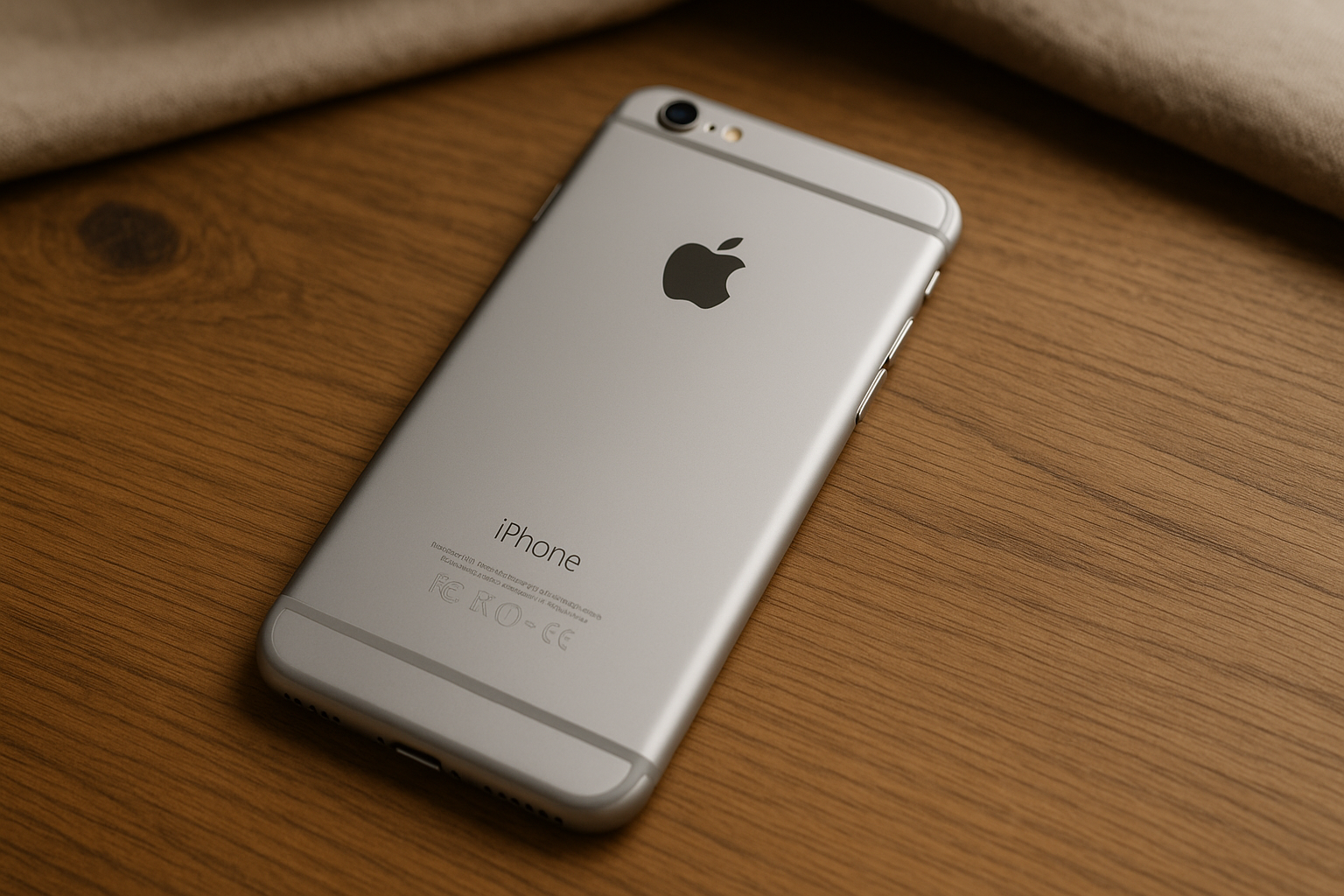
The iPhone 6 was first launched with two screen sizes: the standard 4.7-inch variant and the larger iPhone 6 Plus with a 5.5-inch display. Thanks to Retina HD technology, the screen offered sharp resolutions and vivid color representations, resulting in a greatly improved visual experience. This larger size was carefully combined with a rounded aluminum design, making the smartphone comfortable to hold despite the larger screen.
Inside, Apple introduced the powerful A8 chip with 64-bit architecture. This processor was not only faster but also more energy-efficient, resulting in better performance with graphically intensive apps and longer battery life. In addition, the iPhone 6 came with an improved M8 motion coprocessor, which enabled new features such as accurate motion and fitness tracking.
The camera also received significant improvements. With an 8-megapixel iSight camera and advanced features such as Focus Pixels and optical image stabilization (only on the Plus variant), the iPhone once again set the standard for smartphone photography. In addition, Apple brought Apple Pay to the market with the iPhone 6, a breakthrough in contactless payments.
This combination of innovations in design, hardware, and functionality made the iPhone 6 a milestone in smartphone history.
Screen and Display: Retina HD for Unmatched Image Quality
The iPhone 6 introduces a Retina HD display that offers impressive image quality, with a sharper and more vivid visual result. Thanks to the 4.7-inch screen size with a resolution of 1334 x 750 pixels and a pixel density of 326 ppi, the user is presented with a sharp, clear, and accurate color spectrum. This technology elevates the viewing experience to a higher level, ideal for viewing photos, videos, and apps.
The display uses an improved LCD panel with dual-domain pixel alignment, which ensures more consistent colors and better contrast, even at angles where distortion would otherwise occur. The contrast ratio of 1,400:1 ensures that black tones remain deep and intense, while white tones appear brighter. This ensures that both dark and light images are perfectly rendered.
One of the notable innovations is the ion-strengthened housing of the glass screen. This not only provides excellent scratch resistance but also increases durability against daily wear and tear. At the same time, an oleophobic coating makes fingerprints easier to remove, keeping the screen clean and attractive.
Furthermore, the display supports dual-domain pixels for better viewing angles, making group viewing or multitasking in various lighting conditions effortless. True Tone display optimizes the color balance, adapted to the ambient light, which reduces eye strain.
The Retina HD display of the iPhone 6 further distinguishes itself thanks to its energy-saving features without compromising performance. It is designed to combine visual clarity with user-friendly durability, giving users a consistent and high-quality experience.
Performance and Speed: A8 Chip and Efficient Energy Consumption
The iPhone 6 introduces the A8 chip, a powerful 64-bit processor designed to deliver advanced performance without compromising energy efficiency. This chip, built with a 20-nanometer process, offers 25% faster CPU performance and 50% faster GPU speeds compared to its predecessor, the A7 chip. This makes the device better equipped for intensive tasks such as real-time gaming, video editing, and running graphically demanding apps.
One of the key highlights of the A8 chip is its ability to deliver consistent performance, even with prolonged use. This is possible thanks to an advanced thermal management system that prevents overheating and intelligently distributes energy across various components. The M8 coprocessor is also used, which enables more efficient data processing of motion sensors. This coprocessor processes data from the accelerometer, gyroscope, barometer, and other sensors, which not only saves energy but also provides a better user experience in fitness and tracking apps.
The energy efficiency of the A8 chip guarantees longer battery life, even under heavy load. Users can enjoy up to 14 hours of talk time on 3G, 10 hours of video playback, and 10 days of standby time. This makes the iPhone 6 a reliable choice for people on the go who depend on a device that is not only powerful but also durable in terms of energy consumption. The A8 chip offers the perfect balance between performance and efficiency.
Camera Specifications: Improved Photo and Video Quality
The iPhone 6 is equipped with an advanced 8-megapixel iSight camera that offers numerous improvements for both photography and videography. With an aperture of f/2.2 and 1.5-micron pixels, it captures sharp images, even in less-than-optimal lighting conditions. The focus has also been optimized thanks to the implementation of Focus Pixels, which ensure faster and more precise focusing.
Key features of the camera
- Improved autofocus: Thanks to Focus Pixel technology, the camera reacts faster when focusing on both still and moving images.
- Burst mode: This mode makes it possible to shoot ten photos per second, so that no important moment is missed.
- True Tone flash: The dual LED flash automatically adjusts to maintain natural colors in every scene, even in low light.
- Panorama function up to 43 MP: This allows larger, more detailed panorama photos to be taken, ideal for landscapes.
Improvements at video level
For videos, the iPhone 6 introduces impressive HD recording capabilities. It supports 1080p video recording at 30 or 60 frames per second (fps), while slow-motion videos are possible at 120 or 240 fps. In addition, the continuous autofocus function during video recording provides more stability. Videos are smooth and sharp thanks to improved digital image stabilization.
“The iPhone 6 combines powerful photo functionality with professional video capabilities, making it suitable for both everyday users and enthusiastic content creators.”
In addition, the front-facing FaceTime HD camera has been improved. It has a wider aperture and a new improved sensor, resulting in brighter and sharper selfies and video calls. Features such as HDR and face detection also provide more detail and consistency in results.
With these innovations, the iPhone 6 camera perfectly meets the demands of modern users who are looking for excellent image quality.
iOS Features: New Possibilities with iOS 8
With the introduction of iOS 8, users of the iPhone 6 and other supported devices were provided with a range of innovative features and improvements, designed to optimize the user experience. This software update brought significant changes and offered new ways to get more out of the device.
Widgets and Action Extensions
iOS 8 introduced widgets to the Notification Center. Users could now view useful information directly from the screen, such as weather updates, calendar appointments, or news, without opening a separate app. In addition, action extensions brought more functionality to apps. This allowed users to perform tasks, such as saving a document to a cloud service or sharing an article via social media, without leaving the app.
Improved Messages app
The Messages app was also significantly improved. Voice messages, faster photo sharing, and group chats with customizable features, such as adding or removing participants, made communication more versatile. In addition, it was now possible to easily share locations in the app, which made planning and appointments easier.
Health and HomeKit
The Health app was a crucial step in providing insights into health and fitness. With data from fitness apps and wearables, the app offered a central place to manage all health information clearly. HomeKit made it possible to control smart devices at home, such as lighting and thermostats, directly from the iPhone via apps or with Siri voice commands.
Continuity and Handoff
One of the most striking features of iOS 8 was Continuity. Through integration with macOS, users could seamlessly continue tasks on different Apple devices. With the Handoff function, for example, it was possible to start an email on the iPhone and finish it on a Mac.
QuickType and Third-Party Keyboards
The introduction of QuickType brought intelligent predictions to the keyboard. The function analyzed context and offered relevant suggestions while typing. In addition, for the first time, third-party keyboards could be installed, giving users more customization options for their typing experience.
With iOS 8, Apple showed a clear focus on user-friendliness, productivity, and innovation, while the ecosystem was further strengthened by seamless integration between devices and applications.
Design and Build Quality: Thinner, Lighter, and More Robust
The iPhone 6 introduces a stunning balance between elegance and durability thanks to advanced designs and new production techniques. This smartphone stands out for its remarkable thinness of only 6.9 millimeters, which is a significant improvement over its predecessors. The lighter design not only provides aesthetic benefits but also ensures extra carrying comfort. Weighing only 129 grams, the iPhone 6 offers an ideal combination of style and functionality.
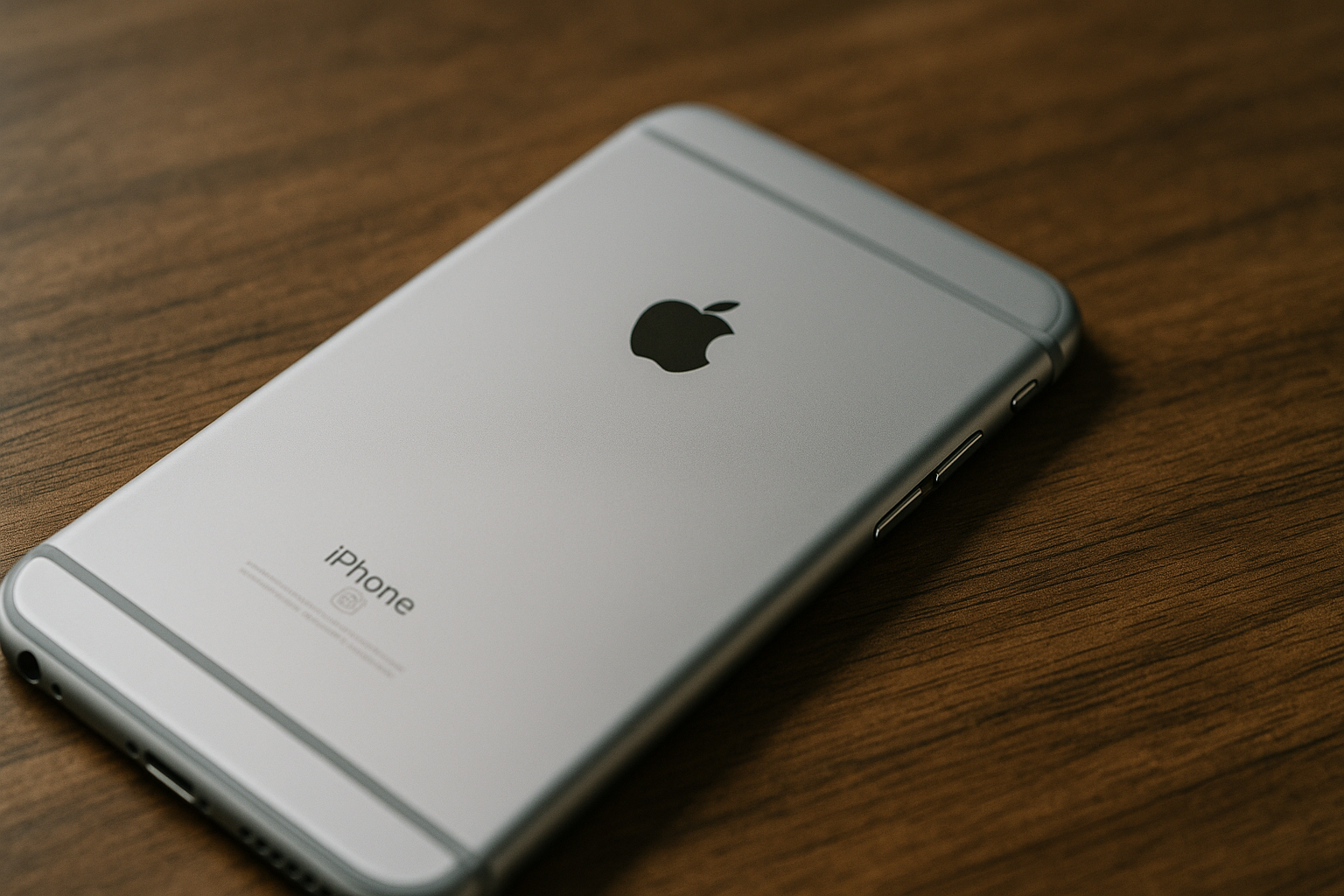
The housing is made of precision-machined aerospace-grade aluminum, reinforced with ion-hardened glass. These high-quality materials not only contribute to a premium look but also increase the robustness of the device. Despite its thin profile, the iPhone 6 can withstand intensive daily use and meets Apple's demanding standards for durability.
Key design features:
- One-piece profile: The rounded corners and smooth transitions between glass and metal offer a seamless and refined look.
- Ultra-thin design: With a thickness of 6.9 mm, the device exudes a modern and streamlined design.
- Durable materials: The use of aluminum and ion-hardened glass offers an excellent balance between lightness and firmness.
- Housing in three colors: Available in space gray, silver, and gold, allowing users to choose a stylish look.
The improved build quality goes hand in hand with practical usability. The larger 4.7-inch Retina HD screen is integrated into a design that can be easily operated with one hand. The use of innovative laser technology and precise assembly procedures contributes to precision and durability. This sets the iPhone 6 new standards for design and build quality in its category.
Storage Options: Choose the Right Capacity for Your Needs
The iPhone 6 offers various storage options to meet a wide range of user needs. Whether you want to store photos, use multiple apps, or regularly watch and make videos, choosing the right capacity is essential to ensure an optimal user experience.
Available Storage Options
The iPhone 6 is available in the following storage capacities:
- 16 GB: Suitable for light users who mainly perform standard tasks such as calling, texting, and using a few apps. However, this is limited for multimedia or storing larger amounts of files.
- 64 GB: An ideal option for users who need a little more flexibility. This allows you to comfortably store a large collection of apps, hundreds of photos, and several videos without worrying too much about storage space.
- 128 GB: Perfect for the user who manages a lot of media files, such as 4K videos, extensive music collections, and heavy apps. This option provides significant space and prevents your storage from filling up quickly.
Important Considerations
When choosing a storage capacity, it is important to consider your usage habits and future needs. Apps and operating systems are increasingly taking up more space due to frequent updates and improvements. If you find yourself frequently deleting files to free up space, a higher storage capacity may be a wiser choice.
In addition, the iPhone 6 does not offer expandable storage options such as microSD cards. This means that the amount of storage you choose at the time of purchase is final. Therefore, carefully consider how you want to use your device and prepare for future storage needs.
Choosing the right storage capacity can have a direct impact on how enjoyable and efficient you can use your iPhone.
Battery Life: How Does the iPhone 6 Perform in Daily Use?
The battery life of the iPhone 6 plays a crucial role in how well the device fits into the user's busy daily life. Equipped with an 1810 mAh lithium-ion battery, the device delivers a solid performance in terms of energy management. Although smartphones today often have significantly larger batteries, Apple managed to combine efficient software optimizations with hardware in the iPhone 6 to provide balanced battery life.
With normal use, the iPhone 6 can usually last a full day without needing to be charged in between. With activities such as surfing the internet, sending messages, and light app-based tasks, the battery performs well. According to Apple, the iPhone 6 offers up to 14 hours of talk time on a 3G connection and approximately 10 hours of browsing via Wi-Fi or mobile data. Video playback is estimated at about 11 hours, while audio playback can last up to 50 hours on a single charge.
Intensive users, such as people who play a lot of games, stream videos, or use demanding apps, may find that the battery drains faster. In this context, a power bank or the use of a low-power mode may be necessary. Low Power Mode, a feature introduced with iOS 9, offers ways to extend battery life by limiting features such as background activities and visual effects.
Charging the device is done via the Lightning cable, but fast charging is not supported. Average charging from 0% to 100% takes about 2 hours. This may be considered slow compared to more modern devices, but at the time this was accepted as standard.
In short, the battery life of the iPhone 6 is decent for less intensive use, although it may fall short in more demanding scenarios.
Security and Privacy: Touch ID and Other Security Features
With the introduction of the iPhone 6, Apple places a strong emphasis on security and privacy. One of the most striking security features is the Touch ID sensor. This technology uses a fingerprint sensor that is integrated into the home button. This allows users to easily and securely unlock their device with a touch. In addition, Touch ID provides extra security for apps and features such as Apple Pay.
However, the functionality of Touch ID goes beyond just unlocking. The system uses a uniquely encoded algorithm to securely store fingerprints on the device. Apple emphasizes that this biometric data is never stored on servers or shared with external parties. This approach guarantees the user's privacy and minimizes the chance of data leaks.
In addition to Touch ID, the iPhone 6 also offers additional security layers. The device supports a six-digit passcode, significantly increasing the number of possible combinations. Users can also enable two-factor authentication to add an extra layer of protection when logging into Apple ID and iCloud.
For theft prevention, the iPhone 6 includes the well-known ‘Find My iPhone’ function. This allows users to locate, lock, or remotely erase their device if it is lost or stolen. Activation Lock ensures that a device cannot be reactivated without the associated Apple ID password.
Security updates are regularly rolled out via iOS software, so users remain protected against the latest threats. Thanks to a combination of hardware, software, and services, Apple enables users to rely on a robustly secured ecosystem.
Connectivity: Support for Faster Networks and NFC
The iPhone 6 offers significant improvements in connectivity, contributing to a smoother and faster user experience. With support for 4G LTE Advanced technology, the device offers higher download speeds, making surfing the internet and streaming multimedia even more efficient. The number of supported LTE bands has been expanded, which is especially important for users who regularly travel internationally. This ensures that the iPhone 6 is compatible with more mobile networks worldwide.
Thanks to the addition of Wi-Fi 802.11ac, the iPhone 6 uses a fast wireless internet connection. This makes it possible to download files faster and use streaming services with less buffering. Wi-Fi calling is also supported, allowing users to bypass their mobile network when they are in an area with poor mobile coverage, as long as a good Wi-Fi signal is present.
A significant advance in connectivity is the integration of Near Field Communication (NFC). The iPhone 6 marks Apple's first step towards mobile payments via Apple Pay. Thanks to NFC, users can make secure, seamless payments by simply holding their iPhone against a compatible payment terminal. This technology is designed with privacy and security in mind, as sensitive payment information is never shared with merchants.
In addition to these technologies, the iPhone 6 continues to support traditional connection options, such as Bluetooth 4.0 and the Lightning connector. These enable fast data transfer and compatibility with a wide range of accessories. All this makes the iPhone 6 versatile and forward-thinking in terms of connectivity options.
Key Features of the iPhone 6 That Attract Users
The iPhone 6 introduced several groundbreaking features that redefined the smartphone market and attracted users with an innovative combination of design, performance, and functionality. The unique features are broken down below to highlight the essence of this flagship.
Larger and Slimmer Design
The iPhone 6 set a new standard with its larger 4.7-inch Retina display, which offered a resolution of 1334 x 750 pixels. The device had a slim, rounded design of only 6.9 mm thick and was made of high-quality aluminum, making it both elegant and comfortable to hold. This sleek design supported an improved visual and tactile experience.
Improved Performance
The introduction of the A8 chip with 64-bit architecture was a significant step forward. This powerful processor delivered better performance and energy efficiency, allowing games, apps, and multitasking to run smoothly. In combination with the M8 motion coprocessor, activities such as counting steps and altitude differences were measured more accurately.
Advanced Camera Functionalities
The 8-megapixel iSight camera received significant improvements, such as Focus Pixels technology for faster and more accurate autofocus. The camera also had the ability to record 1080p HD videos at 60 frames per second and slow-motion videos at 240 fps. The improved FaceTime HD camera made selfies and video calls sharper and more vivid.
Apple Pay
With the introduction of an NFC chip, the iPhone 6 offered support for Apple Pay, a secure and easy way to make payments without physical cards. This feature revolutionized mobile payments and set a new standard for convenience in daily transactions.
Improved Battery Usage
Despite the powerful performance, Apple managed to improve battery efficiency. Users could benefit from longer usage times when surfing, watching videos, or calling, ensuring that functionality remained in line with contemporary needs.
With these features, the iPhone 6 raised user-friendliness and functionality to a higher level, explaining its appeal to a wide audience.
Comparison with Other iPhone Models: What Makes the iPhone 6 Unique?
The iPhone 6 marked a significant milestone in the evolution of Apple's iPhone series and differed from its predecessors and successors in several ways. These differences provide a clear picture of what makes the iPhone 6 unique within the family of iPhones.
Size and Design
One of the most striking changes is the introduction of a larger screen size. Compared to the iPhone 5s, which had a 4-inch screen, the iPhone 6 features a 4.7-inch Retina HD display. This larger screen makes the iPhone 6 more attractive to users looking for a better viewing experience. In addition, the iPhone 6 has a rounded design, made of anodized aluminum, unlike the more angular design of its predecessors.
Improved Performance
The iPhone 6 is equipped with the Apple A8 chip, a significant upgrade compared to the A7 chip of the iPhone 5s. Thanks to the 64-bit architecture and improved energy efficiency, the iPhone 6 is not only more powerful, but it also offers longer battery life. This combination makes the device suitable for more intensive tasks such as gaming and video playback.
New Features
This model was the first to introduce support for Apple Pay, making contactless payment via NFC possible. This was an innovative step that was not present in previous iPhone models. The camera also improved significantly, with a Focus Pixels system in the 8 MP iSight camera, allowing for faster and more precise autofocus.
Comparison with Successors
Compared to its successor, the iPhone 6s, the iPhone 6 lacks 3D Touch functionality, for example. Yet the iPhone 6 distinguishes itself with its lighter weight and slightly sharper focus on battery efficiency, which can be a deciding factor for some users.
The iPhone 6 introduced a powerful blend of design innovation and functional improvements, making it a unique choice at the time of its launch.
User Experience: How Is the iPhone 6 Received?
The introduction of the iPhone 6 marked an important moment in the evolution of Apple's smartphones, not only because of the hardware improvements but also because of the impact on the overall user experience. Many users emphasize the larger screen size, which at 4.7 inches was a welcome change compared to the smaller screens of previous models. This resulted in improved readability, more intuitive use of apps, and a better display of multimedia content.
The ergonomics of the iPhone 6 are considered positive by many. Thanks to the rounded edges and thinner design, the device fits comfortably in the hand. However, some users complain that the larger size can be a challenge for one-handed operation, especially for those with smaller hands. Apple's solution, the so-called "Reachability" function, however, offers an easy way to slide the screen down for better accessibility.
In terms of speed and performance, the A8 chip of the iPhone 6 is widely praised. Users report that apps open faster and run more smoothly than on previous models. Multitasking and gaming are experienced as smoother, while battery life shows significant improvements, although intensive users sometimes still need faster charging.
iOS 8, which came standard with the iPhone 6, also contributes to the positive experience. New features such as interactive notifications and the expanded capabilities of iCloud Drive are widely appreciated. However, there are comments about the lack of full customizability, a feature that Android users often highlight as an advantage.
Finally, the renewed camera makes a strong impression on many users. The improved autofocus and optical image stabilization (on the iPhone 6 Plus model) are praised, especially by photography enthusiasts. However, it is sometimes reported that the excellent lens on the back is susceptible to scratches, which is a concern for some users.
Conclusion: Why the iPhone 6 Is Still Relevant in 2023
The iPhone 6, originally released in 2014, remains a remarkable device thanks to its combination of classic functionality and timeless design. Despite rapid technological advances and the arrival of newer iPhone models, there are several reasons why this device is still relevant in 2023.
1. Accessibility and affordability
For consumers looking for a budget-friendly smartphone without compromising on essential features, the iPhone 6 offers an excellent option. The device is widely available on the refurbished market and is often offered at attractive prices. This makes it ideal for users with a small budget or those looking for a first smartphone.
2. Simple, intuitive design
The 4.7-inch Retina HD screen of the iPhone 6 remains an ideal balance between size and functionality. The device fits comfortably in the hand, and the slim, lightweight design still appeals to users. In addition, the physical home button in combination with Touch ID provides an easy-to-use and secure experience, loved by both younger and older users.
3. Solid performance
Although the iPhone 6 does not offer the latest processor, the A8 chip still performs well for everyday tasks such as calling, texting, surfing the internet, and accessing apps such as social media and streaming services. The user-friendly iOS interface remains smooth, and support for older iOS versions provides a stable experience without frequent updates.
4. Sustainability and environmentally responsible
By reusing or repairing old devices such as the iPhone 6, consumers contribute to sustainability and waste reduction. This aligns with a growing awareness of the ecological impact of electronic devices.
5. A no-nonsense solution
For users who don't care about the latest features and technologies but prefer a reliable, simple smartphone, the iPhone 6 remains an attractive option. The device is perfectly suited to people who want to use technology functionally without unnecessary complexity.
From these perspectives, the iPhone 6 remains a valued and practical choice within the current technological landscape.