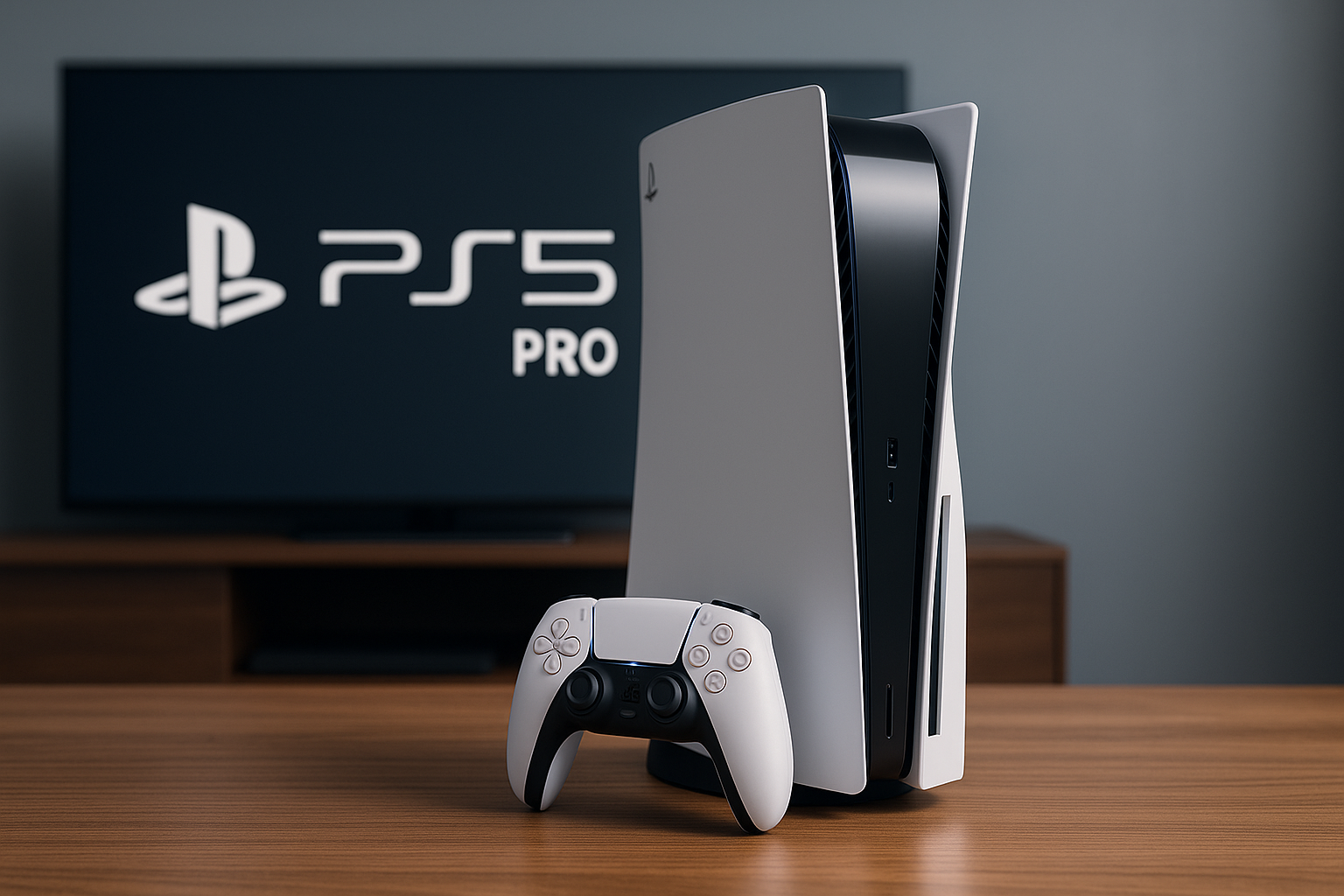
Evaluating the Advancements: How Much Better Will the PS5 Pro Be?
How much better will the PS5 Pro be?
The PS5 Pro promises to bring significant upgrades in performance, graphics, and overall gaming experience. For those looking to maximize their gaming setup, combining it with a powerful laptop can offer improved streaming, multitasking, and enhanced gameplay.
Here’s an overview:
- Introduction to the PS5 Pro: What to Expect
- A Brief History of PlayStation Upgrades
- Technical Specifications: A Deep Dive
- Performance Enhancements: Graphics and Speed
- New Features and Functionalities
- Comparison with the Current PS5: Key Differences
- Gaming Experience: What Gamers Can Look Forward To
- Backward Compatibility and Game Library
- Price Point: Value for Money
- Potential Challenges and Criticisms
- Consumer Expectations and Market Reception
- Release Date and Availability
- Conclusion: Is the PS5 Pro Worth the Upgrade?
Introduction to the PS5 Pro: What to Expect
The anticipation around Sony’s PlayStation 5 Pro is building, as enthusiasts and analysts alike speculate on the enhancements and features this new iteration will bring. The PS5 Pro promises to deliver significant advancements over its predecessor, addressing both hardware and software improvements aimed at elevating the gaming experience.
Enhanced Performance
One of the most talked-about features of the PS5 Pro is its expected performance boost. Users can anticipate:
- Improved Graphics: Leveraging AMD’s latest RDNA 3 architecture, the PS5 Pro is set to offer superior graphics rendering, with support for higher resolutions such as native 4K and even 8K gaming.
- Faster Load Times: The inclusion of a more advanced SSD is likely to further reduce load times, enhancing overall system responsiveness.
Superior Visuals and Immersion
The PS5 Pro is expected to push the boundaries of visual fidelity and immersive gameplay. Key anticipated features include:
- Ray Tracing Enhancements: Superior ray tracing capabilities will provide more realistic lighting, reflections, and shadows, creating a visually compelling experience.
- Advanced HDR: Enhanced High Dynamic Range support is likely to deliver richer colours and deeper contrasts, further immersing players in the game world.
Expanded Storage Options
Understanding the growing storage needs of modern gaming, the PS5 Pro is expected to offer:
- Increased Internal Storage: Forecasts suggest a larger internal SSD to accommodate more games, updates, and downloadable content.
- Expandable Storage: Improved support for external and expandable storage solutions, making it easier for users to increase their storage capacity.
Upgraded User Experience
User experience is another focal point for the PS5 Pro. Anticipated upgrades include:
- Refined User Interface: A more intuitive and responsive user interface, designed to provide seamless navigation and accessibility.
- Backward Compatibility: Continuation and enhancement of backward compatibility, allowing for a broader range of PS4 and PS5 titles to be enjoyed.
Future-Proofing the Console
With an eye on future developments, the PS5 Pro aims to be a long-term investment for gamers:
- Support for Future Technologies: Integration of emerging technologies such as Virtual Reality (VR) advancements and augmented reality (AR) capabilities.
- Enhanced Connectivity: Superior internet connectivity options, including support for higher bandwidths to facilitate smoother online play and streaming.
These expected features and improvements position the PS5 Pro as a significant leap forward in console gaming, aiming to set new industry standards.
A Brief History of PlayStation Upgrades
The evolution of the PlayStation brand is marked by a series of technological upgrades that have continuously pushed the boundaries of gaming. Starting with the original PlayStation, released in 1994, Sony Computer Entertainment set the stage for home gaming consoles with CD-ROM based games, enabling more complex and visually compelling titles than its cartridge-based predecessors.
PlayStation (PS1): Introduced in 1994, this console revolutionised home gaming with its CD-ROM technology and a robust library of games that included titles like “Final Fantasy VII” and “Gran Turismo”. The PS1 set a precedent for future consoles with its focus on 3D graphics.
PlayStation 2 (PS2): Launched in 2000, the PS2 remains the best-selling console of all time. It added DVD playback capabilities, making it a multifunctional device. Key titles like “Grand Theft Auto: San Andreas” and “Metal Gear Solid 2” showcased its upgraded hardware.
PlayStation 3 (PS3): Released in 2006, the PS3 introduced Blu-ray disc support and more advanced internet connectivity. It included an integrated online marketplace and social gaming features. Innovations such as the Cell Processor and HDMI output elevated its graphical and processing capabilities.
PlayStation 4 (PS4): Coming out in 2013, the PS4 brought significant hardware improvements, including an improved GPU, increased RAM, and streamlined architecture. Notable games like “The Last of Us Part II” and “Horizon Zero Dawn” exemplified its power. The PS4 Pro, an enhanced version released in 2016, offered 4K resolution and improved VR support.
PlayStation 5 (PS5): Released in 2020, the PS5 is the latest in the lineup, featuring ultra-high-speed SSD, ray tracing, and a new controller with haptic feedback and adaptive triggers. Titles like “Demon’s Souls” remake and “Ratchet & Clank: Rift Apart” demonstrate its groundbreaking capabilities.
Throughout its history, each PlayStation model has built upon its predecessor, incorporating user feedback and technological advancements to deliver superior gaming experiences. The PlayStation’s legacy of innovation sets high expectations for what the PS5 Pro might bring to the table.
Technical Specifications: A Deep Dive
The anticipated PlayStation 5 Pro is expected to surpass its predecessor in multiple technical facets. Below, this section delves into the prominent specifications that set the PS5 Pro apart.
Central Processing Unit (CPU)
- Architecture: Enhanced version of AMD’s Zen 2 or possibly Zen 3 architecture.
- Cores: Likely to house upwards of 8 cores.
- Clock Speed: Anticipated higher base and boost clock speeds.
Graphics Processing Unit (GPU)
- Architecture: Upgraded RDNA 2 or RDNA 3 architecture.
- Compute Units: Increased number of compute units for better graphical performance.
- Ray Tracing Support: Enhanced real-time ray tracing capabilities.
- Teraflops: Expected greater than 10 Teraflops for improved efficiency.
Memory
- RAM: Up to 18GB of GDDR6 memory, surpassing the PS5’s 16GB.
- Bandwidth: Elevated memory bandwidth for better data transfer rates.
Storage
- SSD: Larger and faster SSD, potentially 2TB capacity from more advanced NVMe technology.
- Read/Write Speeds: Improved read and write speeds, ensuring faster load times.
Cooling System
- Thermal Design: Updated cooling design to manage increased thermal output.
- Cooling Mechanism: Enhanced liquid metal or advanced fan system.
Audio
- Tempest 3D AudioTech: Further refined for immersive audio.
Backward Compatibility
- PS4 and PS5 Games: Support for a broader range of backward-compatible titles.
- Optimised Titles: Enhanced performance for legacy titles.
Connectivity
- Ports: Possible expansion of USB ports, USB-C inclusion.
- Wi-Fi and Bluetooth: Advanced wireless standards like Wi-Fi 6 and Bluetooth 5.2 for more stable connections.
Performance Enhancements
- Frame Rates: Higher frame rate support, potentially up to 120 frames per second.
- Resolution: Increased native 4K gaming support, with potential for 8K.
Additional Features
- DualSense Controller: Improved haptic feedback and adaptive trigger enhancements.
- Expansion Slots: Additional slots for feature expansions.
These specifications indicate a substantial leap in the overall performance and user experience for the PS5 Pro, making it a formidable upgrade over the base PS5 model.
Performance Enhancements: Graphics and Speed
The PS5 Pro is poised to bring significant performance enhancements to both graphics and speed, raising the bar for next-generation gaming experiences.
Graphics Enhancements
- Ray Tracing Improvements: Enhanced ray tracing capabilities are expected to deliver more realistic lighting, shadows, and reflections. This advancement will heighten visual fidelity and immersion in gaming worlds.
- Higher Resolution Support: While the PS5 already supports 4K gaming, the PS5 Pro may extend this with upscaling or native 8K support, offering sharper and more detailed visuals for games and media.
- Improved Textures and Details: The PS5 Pro’s advanced GPU will likely handle high-resolution textures better, resulting in more detailed environments and character models. Enhanced texture streaming can reduce pop-in and enhance game fluidity.
Speed Enhancements
- Higher Clock Speeds: The PS5 Pro is anticipated to feature a CPU and GPU running at higher clock speeds, improving processing power and rendering capabilities. This allows for smoother gameplay and faster load times.
- Expanded SSD Storage: Improved SSD technology will likely offer greater storage capacities and faster read/write speeds. This upgrade will further reduce loading times and support larger game files.
- Enhanced Bandwidth and Latency: The utilisation of faster RAM and more efficient data pipelines will increase memory bandwidth and reduce latency, ensuring quicker asset streaming and smoother performance during intensive gameplay scenes.
“The aim is to create a more seamless and responsive gaming experience by minimising lag and frame drops, which is crucial for competitive gaming,” said a gaming analyst.
Advanced Customisations
- Dynamic Resolution Scaling: The PS5 Pro may utilise more advanced dynamic resolution scaling techniques to maintain consistent frame rates without sacrificing visual quality.
- Flexible Refresh Rates: With support for variable refresh rate technology, the PS5 Pro can synchronise the frame rate output to match display capabilities, reducing screen tearing and stutter.
Overall, the combination of these graphics and speed enhancements highlights the PS5 Pro’s goal to offer unrivalled performance, pushing the boundaries of what is possible in console gaming.
New Features and Functionalities
The PS5 Pro is expected to introduce an array of new features and functionalities, enhancing both hardware and software capabilities. The following points outline some key advancements:
Hardware Enhancements
- Enhanced GPU and CPU: The PS5 Pro may feature a more powerful GPU and an upgraded CPU, providing significantly better processing power for high-end graphics and smoother gameplay.
- Ray Tracing 2.0: Improved ray tracing technology is anticipated, offering unprecedented levels of realism in lighting, shadows, and reflections, making game environments more immersive.
- Increased Storage: A larger SSD, potentially over 1TB, could address storage concerns, allowing users to store more games and content without compromising on speed.
- Higher Frame Rates: Support for frame rates up to 120 fps or beyond could be included, ensuring a fluid visual experience, particularly for fast-paced and competitive games.
Software Upgrades
- Optimised User Interface: A redesigned, more intuitive user interface may streamline navigation, offering quicker access to games, media, and settings.
- Backward Compatibility: Enhanced backward compatibility with a wider range of previous PlayStation titles, ensuring that players can enjoy their older game collections on the new hardware.
- Enhanced PSVR Integration: The PS5 Pro is expected to offer superior integration with PlayStation VR, delivering a more seamless and immersive virtual reality experience.
- New Features in PlayStation Network (PSN): Upgraded social and sharing features, including more robust live streaming capabilities, improved friend management, and refined competitive play options.
Additional Functionalities
- AI-driven Enhancements: The PS5 Pro might integrate advanced AI algorithms to enhance gaming performance, provide smarter in-game characters, and improve overall user experience.
- Expanded Audio Capabilities: Support for next-generation audio technologies to deliver richer soundscapes and more precise audio positioning, further immersing gamers in the action.
- Energy Efficiency: The PS5 Pro could introduce more energy-efficient components, reducing power consumption and potentially adding features for better thermal management and quieter operation.
Comparison with the Current PS5: Key Differences
The PS5 Pro brings forth several key enhancements when compared to the current PS5.
Improved Hardware Specifications
CPU and GPU:
- The PS5 Pro is expected to feature a more powerful CPU and GPU, utilising AMD’s next-gen architecture.
- This advancement aims to support higher frame rates and resolutions, including potential 8K gaming capabilities.
Ray Tracing:
- Enhanced ray tracing performance on the PS5 Pro allows for more realistic lighting and shadows, pushing graphical fidelity beyond the PS5’s capabilities.
RAM and Storage:
- An increase in RAM and faster SSD storage will significantly reduce load times and improve overall system performance, enhancing user experience.
Advanced Display and Visuals
8K Output Support:
- While the PS5 supports 4K, the PS5 Pro is anticipated to natively support 8K output, catering to the latest generation of high-definition displays.
Variable Refresh Rate (VRR):
- With VRR support, the PS5 Pro is expected to offer smoother gameplay, reducing screen tearing and lag.
Enhanced Software and Features
Backward Compatibility:
- Both the PS5 and PS5 Pro support backward compatibility, but the Pro version includes optimisations that improve performance and graphics of older titles.
Exclusive Performance Modes:
- The PS5 Pro is likely to have additional performance modes tailored specifically to maximise its hardware capabilities for certain games.
Design and Build
Cooling System:
- An improved cooling system is expected to be implemented in the PS5 Pro, aiming to reduce thermal throttling and expand the longevity of the console’s performance.
Form Factor:
- While the exact dimensions are yet to be confirmed, the PS5 Pro may have a refined form factor for better spatial fitting and aesthetic appeal.
Connectivity and Compatibility
Wi-Fi and Bluetooth:
- Upgraded Wi-Fi 6E and Bluetooth 5.2 support will ensure faster wireless communication and better connectivity with peripherals.
Peripheral Support:
- Enhanced compatibility with next-gen VR systems and accessories, further broadening the immersive gaming experience.
The PS5 Pro thus represents a substantial leap in terms of power and functionality from the current PS5, aiming to cater to the next level of gaming experiences.
Gaming Experience: What Gamers Can Look Forward To
The PS5 Pro promises significant advancements that will redefine the gaming experience. Enhanced hardware capabilities are set to deliver unparalleled performance, pushing the boundaries of what players can expect from console gaming.
Improved Graphics and Performance
- Ray Tracing: Advanced ray tracing capabilities will provide more realistic lighting, shadows, and reflections, enhancing visual fidelity.
- 4K and 8K Resolution: Support for native 4K and upscaling to 8K resolution will ensure sharper, more detailed graphics.
- Higher Frame Rates: The possibility of achieving up to 120 frames per second will result in smoother gameplay and a more responsive experience.
Virtual Reality Integration
- Next-Gen VR Support: The PS5 Pro is expected to integrate seamlessly with the upcoming PS VR2, offering improved tracking, higher resolution, and minimal latency.
- Immersive Experiences: Enhanced VR capabilities will enable more immersive and interactive gaming experiences, making players feel truly part of the game world.
Audio Enhancements
- 3D Audio Technology: New advancements in 3D audio will provide a more immersive sound experience, allowing players to hear sounds from all directions with pinpoint accuracy.
- Tempest Engine: The PS5 Pro will continue to utilise the Tempest Engine to deliver high-quality spatial audio, creating a more realistic and engaging soundscape.
User Experience and Accessibility
- Customisable Controllers: Enhanced DualSense controllers will feature improved haptics and adaptive triggers, offering more nuanced feedback to match in-game actions.
- Faster Loading Times: With an upgraded SSD, loading times will be significantly reduced, providing a more seamless gaming experience with minimal wait times.
- Game Library and Backward Compatibility: A robust library of exclusive titles and backward compatibility with PS4 titles will offer a comprehensive gaming ecosystem.
Online and Multiplayer Features
- Enhanced Online Play: Improved network capabilities will support more stable and faster online multiplayer experiences, with reduced lag and better matchmaking.
- Social and Sharing Features: Expanded social features will allow gamers to share gameplay moments easily and connect with friends more efficiently.
In summary, the PS5 Pro aims to deliver a transformative gaming experience through cutting-edge hardware, enriched graphics, and immersive audio. These advancements will cater to both casual and hardcore gamers, setting a new standard for future gaming consoles.
Backward Compatibility and Game Library
The PS5 Pro’s approach to backward compatibility speaks volumes about Sony’s strategy to honour the extensive library of PlayStation games. It allows gamers to play their existing PS5 game library without any modification. This is essential as it ensures a seamless transition for existing PS5 owners considering an upgrade.
Key Features of Backward Compatibility:
Comprehensive Game Support: The PS5 Pro supports nearly the entire catalogue of PS5 titles, ensuring that users can continue enjoying their favourite games without interruption.
Enhanced Performance for Older Titles: Some PS4 and PS4 Pro games receive performance boosts such as faster loading times and improved frame rates when played on PS5 Pro.
Save File Continuity: Save files from older versions are transferable, allowing gamers to pick up right where they left off without having to restart or lose progress.
Cross-Generational Party Chat and Messaging: Players can seamlessly communicate and organise gaming sessions across console generations, bridging the gap between older PS systems and the new PS5 Pro.
Game Library Expansion:
The PS5 Pro benefits greatly from a rich and continually expanding game library. Sony’s dedication to exclusive titles forms a substantial part of the console’s appeal. High-profile releases and upcoming titles ensure a steady flow of superior game content.
Notable Launch Titles for PS5 Pro:
Horizon Forbidden West: An expansive open-world game known for its impressive visuals and complex gameplay mechanics.
Gran Turismo 7: A highly anticipated racing title offering photorealistic graphics and extensive car customisation options.
God of War: Ragnarok: This sequel promises to build on its predecessor’s narrative and gameplay depth, optimised for the PS5 Pro hardware.
Forspoken: An action RPG with groundbreaking graphical fidelity and intricate storyline, set to leverage the PS5 Pro’s capabilities maximally.
Backward compatibility combined with an ever-growing game library positions the PS5 Pro as a robust platform for both new gamers and long-time PlayStation enthusiasts.
Price Point: Value for Money
When evaluating the potential value for money that the PS5 Pro offers, one must consider several factors critical to gamers:
- Hardware Enhancements: Upgraded CPU and GPU components are expected, which could be affective for higher resolutions and frame rates. These enhancements seek to improve the visual experience but come at a higher production cost.
- Backward Compatibility: Similar to the transition from PS4 to PS4 Pro, backward compatibility is likely to be a feature. This means existing PS5 game libraries can be utilised without additional expenditure.
- Cost Justification: The market price for the PS5 Pro is expected to hover at a premium compared to the standard PS5. However, features such as ray tracing improvements and higher memory bandwidth could justify the added cost for hardcore gamers and tech enthusiasts.
Essentially, one gets better performance and new features, but at a price.
- Longevity and Future-Proofing: Gamers investing in a PS5 Pro can anticipate longer shelf life due to advanced technology, which may cope better with future game developments compared to improvements in the current-gen PS5.
- Game Performance: Benchmarking data could reflect significant performance uplifts in AAA titles. If the PS5 Pro’s architecture supports higher FPS (frames per second) and real-time rendering enhancements, it would substantially benefit competitive and immersive gaming experiences.
Clearly, while the price point for the PS5 Pro is expected to be higher, the additional benefits and features provided are designed to deliver excellent value for money, especially for serious gamers and technology aficionados. The investment leads to broader games library compatibility, better hardware longevity, and a markedly improved gaming performance, hence, representing considerable value for consumers.
Potential Challenges and Criticisms
The PS5 Pro’s potential advancements come with several challenges and criticisms that need to be addressed. These issues could significantly impact the console’s success and user satisfaction.
Performance Expectations
- Hardware Limitations: While the PS5 Pro aims to offer superior performance, hardware limitations may restrict the extent of improvements possible. The cost of top-tier components could escalate the price, making it less accessible.
- Cooling Systems: With increased processing power, effective cooling becomes critical. Inefficient thermal solutions may lead to overheating issues and prevent the console from achieving peak performance.
Cost Considerations
- Price Point: The PS5 Pro is expected to be more expensive than its predecessor. This price increase might deter potential buyers, particularly those who recently purchased the original PS5.
- Value for Money: Consumers may question whether the enhancements justify the additional cost. The perceived value will be a significant factor in purchasing decisions.
Game Development Challenges
- Compatibility Issues: Developing games that fully utilise the PS5 Pro’s capabilities while maintaining compatibility with the standard PS5 could be challenging. This might lead to a fragmented gaming experience.
- Investment in Exclusive Titles: Game developers might be hesitant to invest in exclusive PS5 Pro titles if the user base is too small, limiting the console’s appeal.
Technological Hurdles
- Power Consumption: Enhanced performance often comes with increased power consumption, raising concerns about energy efficiency and operating costs.
- Supply Chain and Manufacturing: Current global supply chain disruptions could delay production and availability, frustrating consumers eager to get their hands on the console.
User and Community Response
- Upgrade Reluctance: Owners of the original PS5 might be reluctant to upgrade if improvements do not significantly enhance the gaming experience.
- Backlash and Criticism: The gaming community is vocal and quick to criticise. Any perceived shortfalls or discrepancies between promise and delivery can lead to negative publicity and affect sales.
Careful consideration of these potential challenges is essential for the PS5 Pro to succeed in the competitive gaming market.
Consumer Expectations and Market Reception
The anticipated release of the PS5 Pro has spurred significant interest and speculation within the gaming community. Consumers expect notable improvements over the base PS5 model, including enhanced graphics, higher frame rates, and more efficient thermal management. The following aspects highlight critical consumer expectations:
Graphics and Resolution: Consumers anticipate a substantial upgrade in graphics, with potential support for 8K resolution. This expectation is driven by the increasing availability of 8K TVs and the desire for future-proof gaming experiences.
Performance Enhancements: Gamers look forward to smoother gameplay with higher frame rates, potentially reaching up to 120 frames per second (FPS). This performance boost is seen as essential for competitive gaming and ensuring immersive experiences in demanding titles.
Storage Improvements: With games becoming increasingly large, expanded storage options and faster solid-state drive (SSD) performance are key expectations. The PS5 Pro is expected to offer larger capacity drives and improved data transfer speeds to reduce load times.
Backward Compatibility: There is a strong demand for enhanced backward compatibility with previous PlayStation titles. Consumers expect the PS5 Pro to seamlessly run games from older PlayStation consoles with improved performance and visual quality.
Design and Form Factor: Improved cooling solutions and a more efficient thermal design are anticipated to address overheating concerns. Additionally, a more compact form factor might be desirable for better integration within home entertainment setups.
The market reception for the PS5 Pro will hinge on Sony’s ability to meet these expectations. The success of previous PlayStation mid-generation upgrades, such as the PS4 Pro, sets a benchmark that Sony is compelled to exceed. Retailers and industry analysts predict that if Sony delivers on these enhancements, the PS5 Pro will witness robust demand upon its launch.
Maintaining competitive pricing will also play a crucial role in consumer adoption. The gaming community is sensitive to price fluctuations, and Sony must strike a balance between cutting-edge technology and affordability to ensure widespread market acceptance.
Retailers anticipate significant pre-order volumes, driven by dedicated PlayStation fans and early adopters. The PS5 Pro’s market entry strategy, including limited-edition bundles and exclusive game releases, may further stimulate consumer interest and facilitate strong initial sales.
Release Date and Availability
The PlayStation 5 Pro (PS5 Pro) is one of the most highly anticipated gaming consoles, generating significant interest among gamers. Sony has maintained its reputation for periodically releasing updated versions of their consoles, promising enhanced performance, features, and overall user experience. However, the actual release date of the PS5 Pro remains subject to speculation, with various industry insiders and analysts providing different insights.
Historical Context:
- Sony typically follows a timeline of approximately three to four years between initial console releases and their respective “Pro” versions.
- For example, the PlayStation 4 was launched in 2013, and the PlayStation 4 Pro was released in 2016.
Potential Dates:
- Analysts suggest that the PS5 Pro could be released between late 2023 and late 2024. This timeline aligns with the previous patterns observed in Sony’s release strategy.
- Unofficial reports and leaks from reliable sources hint at an announcement around mid-2023, with a subsequent release date in the holiday season or early 2024.
Global Availability:
- Sony is likely to adopt a phased release strategy for the PS5 Pro, similar to the launch of the PS5.
- Initial availability could be limited to major markets such as North America, Europe, and Japan, followed by a gradual rollout to other regions.
- Pre-orders might commence a few months before the official release date, giving eager customers the chance to secure their units beforehand.
Retail Channels:
- The PS5 Pro will be available through multiple retail channels, including:
- Online platforms such as Amazon, Best Buy, and the official PlayStation Store.
- Brick-and-mortar stores like GameStop, Walmart, and regional electronics outlets.
- Enhanced stock management measures are expected to mitigate the supply chain issues witnessed during the PS5’s launch.
- The PS5 Pro will be available through multiple retail channels, including:
Quotation from an industry analyst:
“The anticipation for the PS5 Pro is unparalleled. With advancements in technology, expectations are that Sony will deliver a substantial upgrade that caters to both hardcore gamers and casual users alike.”
- Price Point Predictions:
- The PS5 Pro is anticipated to be priced higher than its predecessor, reflecting its advanced capabilities.
- Estimates range between £450 to £550, depending on the configuration and features included.
Ensuring the PS5 Pro’s timely release and broad availability will undoubtedly be critical for Sony to maintain its competitive edge in the gaming industry.
Conclusion: Is the PS5 Pro Worth the Upgrade?
The PS5 Pro aims to deliver substantial improvements over the standard PS5. The most notable advancements include enhanced graphical performance and faster load times. The integration of a more powerful GPU facilitates 4K gaming at higher frame rates, pushing the limits of visual fidelity. Moreover, the potential for 8K resolution support, even if limited to specific titles, promises forward-thinking compatibility with the latest display technologies.
In terms of hardware, the PS5 Pro is expected to feature an upgraded CPU, providing better multitasking capabilities and smoother overall performance. The potential inclusion of more robust cooling systems aims to address existing thermal management issues, ensuring sustained performance during intensive gaming sessions. Enhanced storage solutions, whether through larger built-in SSDs or improved support for external storage expansions, address the growing demand for digital content space.
Additional features may include further development of the DualSense controller, with increased haptic feedback precision and adaptive triggers, enhancing the immersive experience. The commitment to backward compatibility ensures that existing PS5 games will see improved performance and possibly graphical enhancements on the PS5 Pro, preserving the value of current game libraries.
The PS5 Pro’s anticipated advanced ray tracing capabilities significantly improve lighting, shading, and reflection dynamics, providing a more realistic gaming environment. Enhanced support for VR gaming, possibly including a new version of PlayStation VR, indicates Sony’s dedication to evolving the immersive gaming landscape.
Potential drawbacks include the high cost of entry, with the PS5 Pro likely being priced higher than its predecessor. There is also the consideration of early adopter challenges, such as availability and initial software optimisation. Game developers will take time to fully harness the new hardware capabilities, so immediate benefits may be incremental rather than transformative.
In conclusion, the PS5 Pro presents a compelling option for gaming enthusiasts seeking cutting-edge performance. However, the decision to upgrade depends on individual priorities and current gaming needs.